Despite advances in electronic distress systems such as GMDSS, EPIRBs, and AIS beacons, pyrotechnic distress signals (flares) remain a mandatory and critical part of offshore safety systems.
Their role is straightforward. They provide an immediate, unmistakable visual distress signal when. But behind that, there is a framework of strict regulation, handling requirements, and logistical complexity that must be correctly managed.
Understanding how pyrotechnics work, and how to manage them safely and compliantly can help platform managers and safety professionals keep track of what the need to do.
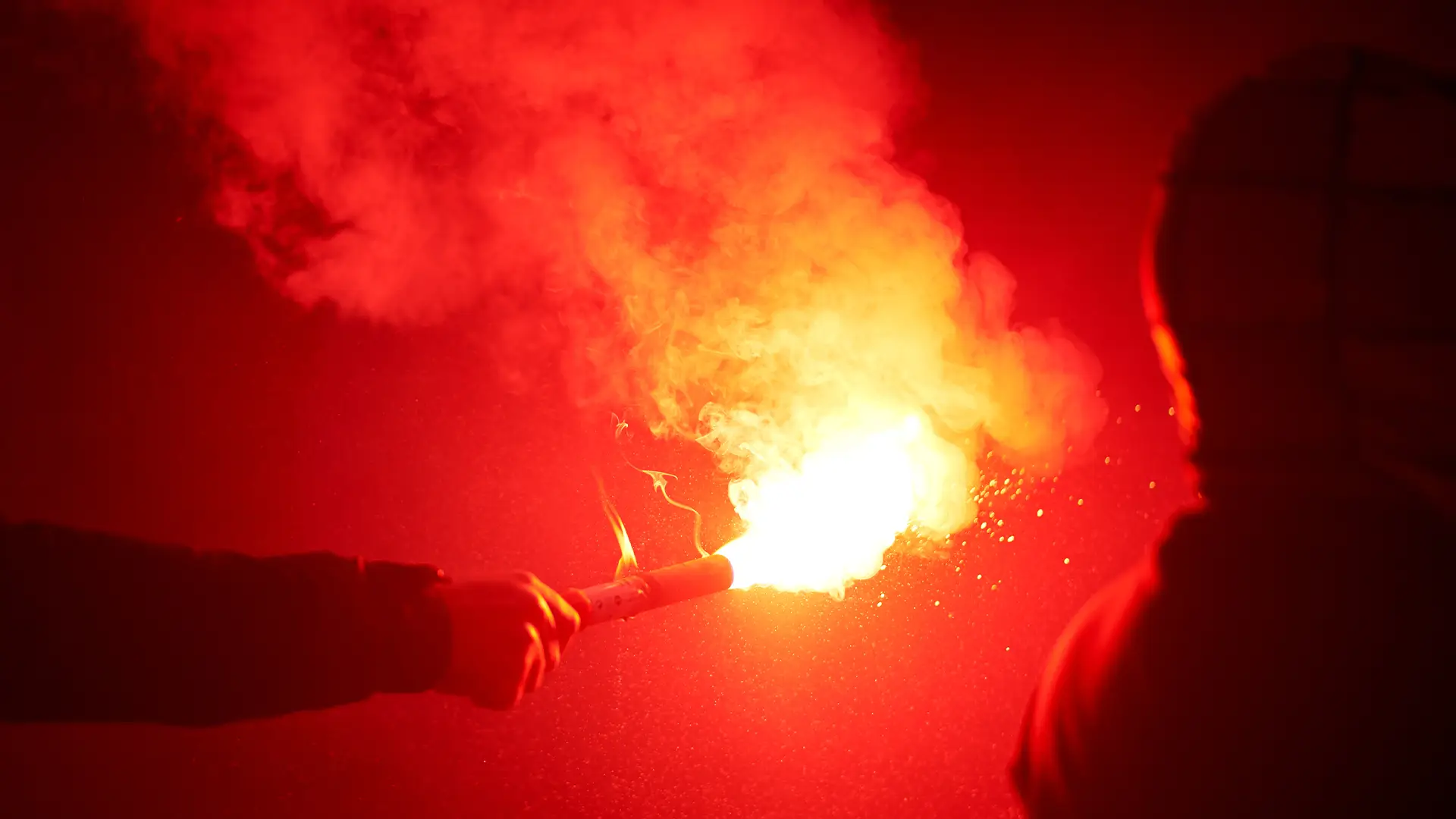
Marine pyrotechnics are self-contained distress signalling devices designed to produce intense light or smoke through a controlled chemical reaction. They’re fully sealed to make sure they work after exposure to moisture, vibration, and changes in temperature.
Unlike a lot of safety equipment, pyrotechnics are single-use devices with a clear operational lifespan, typically four years from manufacture. After this point, they’re liable to have reduced brightness or fail altogether.
Importantly, marine pyrotechnics are legally classified as explosives. This classification governs how they should be transported, stored, handled, and disposed of.
There are three main types of pyrotechnic distress signals used offshore and at sea, each for a specific stage of their emergency response.

Parachute flares attract attention over long distances. Once fired, the flare climbs to around 300 metres before deploying a parachute and burning intensely as it slowly descends.
This allows the signal to be seen from aircraft and vessels up to 30 nautical miles (approx. 55km) away, depending on conditions.
These are the primary distress alert when immediate assistance is needed.
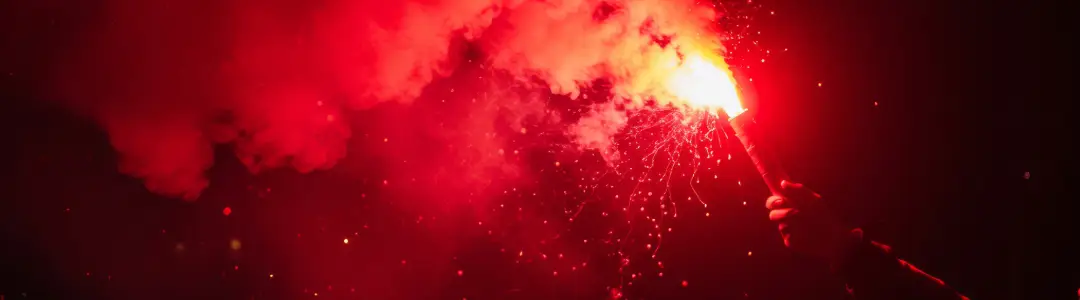
Handheld flares provide a highly visible signal for short-range use. They are typically deployed when rescue vessels or aircraft are already nearby.
Once activated, they burn brightly for around 60 seconds at an extremely high intensity. This allows rescuers to pinpoint a vessel, lifeboat, or person in the water.
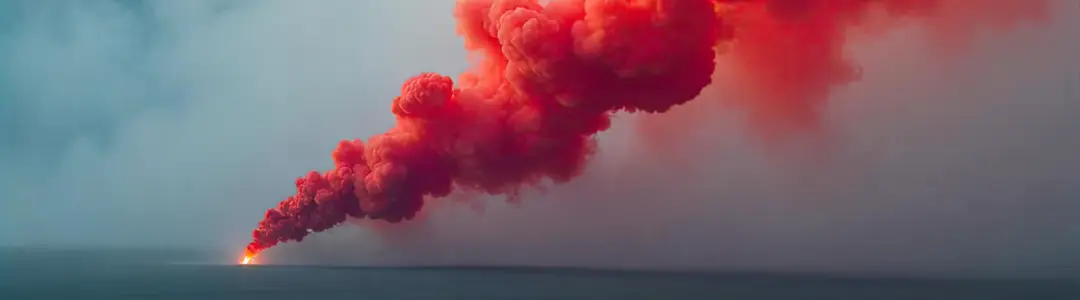
Smoke signals produce large clouds of thick orange smoke. They’re primarily used during daylight operations.
Floating smoke signals are excellently suited for marking the position of personnel in the water or survival craft. This allows rescue teams to find them and maintain contact in challenging conditions.
At their core, pyrotechnics operate through a controlled chemical reaction between an oxidiser and a fuel source. When activated, this reaction generates intense heat and light, producing the visible signal.
Each device is engineered to deliver:
This reliability is critical. In an emergency, there may not be a second attempt.
Pyrotechnics present several important operational and compliance risks if not managed correctly.
The extremely high burn temperatures and can ignite nearby combustible materials if mishandled. This is a particular risk in offshore environments where hydrocarbons may be present.
Degraded or expired devices also present reliability risks, potentially failing when needed most.
Because pyrotechnics are classified as explosives, their storage and transport are tightly regulated.
Improper storage, unauthorised transport, or incorrect disposal can result in:
Expired pyrotechnics cannot simply be discarded. They require controlled disposal through properly authorised channels.
This creates a lifecycle management requirement that offshore operators must actively plan for.
One of the most common misconceptions is that pyrotechnics can be stored indefinitely or disposed of easily. In reality, strict licensing requirements apply to explosive storage.
Many offshore operators rely on specialist partners to manage the supply and disposal process in a compliant manner, ensuring pyrotechnics remain available when needed without introducing unnecessary storage or regulatory risk.
This is particularly important given the increasing restrictions around disposal pathways in the UK.
Flare supports offshore operators through a controlled transfer model designed to maintain compliance while ensuring operational readiness.
Because pyrotechnics are regulated explosive articles, storage without the appropriate explosives licence is not permitted beyond tightly defined limits. As a result, Flare operates on a same-day transfer basis.
This means pyrotechnics are:
This approach ensures full regulatory compliance while minimising storage risk.
However, this model requires precise coordination between supply ships, vessel operators, port authorities, and logistics teams.
Pyrotechnic transfer is not simply a delivery. It is a regulated process that must align precisely with vessel schedules.
Advance planning, clear communication, and coordination are essential to avoid disruption.
While Flare as a partner will do everything they can to make this process go smoothly, it relies on the operator proactively ensuring that the planned timing works out.
Effective management of pyrotechnics relies on proactive planning and lifecycle oversight.
Key best practices include:
This ensures pyrotechnics remain available, compliant, and reliable when needed.
Marine pyrotechnics are still an essential part of offshore emergency preparedness. Their simplicity makes them reliable, but their classification as explosive articles introduces operational and regulatory complexity that cannot be ignored.
When managed correctly, pyrotechnics are a dependable, compliant layer within a wider emergency response system.
When managed poorly, they introduce avoidable risk, cost, and disruption.
For offshore operators, understanding these realities and working with experienced partners ensures pyrotechnics remain what they are intended to be: a reliable safeguard when it matters most.
Flare takes pride in being rigorously audited and certified by leading industry organisations.
Read More