On an offshore installation, a fire extinguisher that fails to work when needed is a potentially fatal gap in your last line of defence. Crews working in harsh conditions, far from shore support, do not have the luxury of troubleshooting equipment at the moment they need it most.
That is the practical reality behind a shift in fire safety that has been building visibly across UK and North Sea operations: the move away from cartridge-operated fire extinguishers toward stored-pressure systems. It is not the result of a single regulatory change or a sudden compliance deadline. It is the product of accumulated pressure from multiple directions such as inspection expectations, operational risk, supply chain vulnerability – all pointing the same way at once.
For most duty holders, the strategic question is no longer whether this transition makes sense. It is how to plan it well.
This article sets out the reasons why, and what a well-managed transition looks like in practice.
The distinction is important to understand before anything else.
A cartridge-operated extinguisher stores its propellant gas in a separate internal cartridge. When the unit is activated, that cartridge punctures and releases gas into the main cylinder, pressurising the extinguishing agent for discharge. This means the cylinder itself is unpressurised until the moment of use.
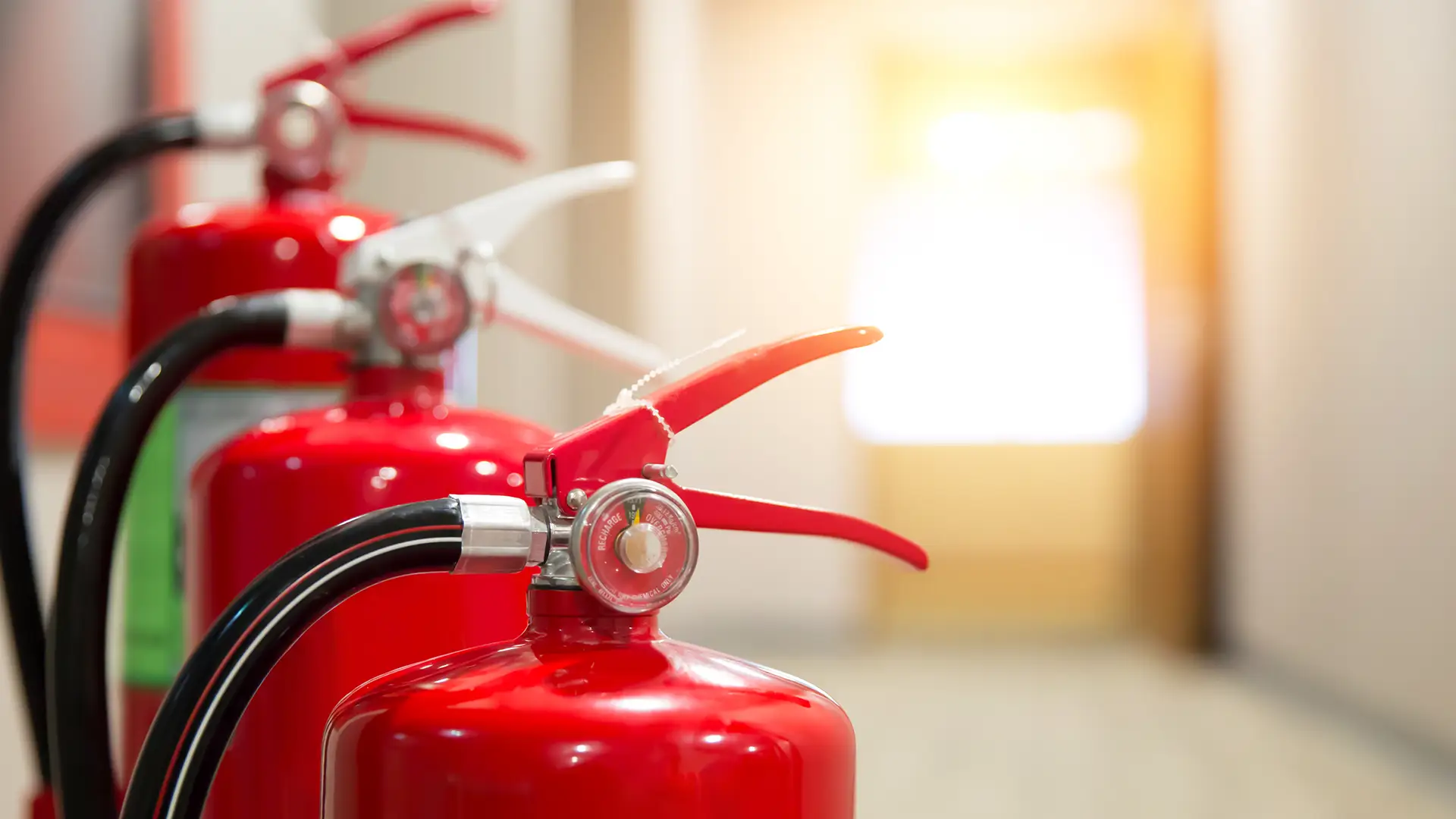
A stored-pressure extinguisher is permanently pressurised. The propellant and agent share the same sealed cylinder, factory-charged and ready to discharge immediately without any activation mechanism between the trigger and the agent.
That difference in design has cascading consequences for compliance, maintenance, crew training, and long-term cost.
Offshore fire protection in the UK sits within a layered framework: the Regulatory Reform (Fire Safety) Order, the Offshore Installations (Prevention of Fire and Explosion, and Emergency Response) Regulations (PFEER) and, where applicable, SOLAS requirements for vessel-based assets.
Within that framework, regulators and surveyors are not mandating stored-pressure systems outright. But the direction of expectation is shifting. Flare's Fire Safety & Compliance Advisory Team notes that they’ve seen a clear decline in the use of cartridge-operated extinguishers in favour of store-pressure systems from clients and suppliers across a range of industries.
What is clear is that cartridge systems generate more compliance touchpoints. Operators running cartridge extinguishers must maintain:
Each of these is manageable in isolation. Together, they represent a meaningful administrative and procedural overhead. One that stored-pressure systems largely eliminate. Factory-sealed units with clear service histories are, in practice, easier to inspect, easier to document, and easier to defend under scrutiny.

The compliance picture matters. So does the operational reality.
Recharging a cartridge-operated extinguisher offshore is a multi-step process: selecting the correct cartridge for the unit, installing it correctly, adding the extinguishing agent in the right quantity for the extinguisher size, verifying pressure, and resealing the unit. Under emergency conditions, or in heavy seas, or with a crew member working outside their regular competence, any one of those steps can go wrong.
And the consequences of equipment failure are not just theoretical. A 2021 IADC safety alert documented a fatality after a cartridge-type dry chemical extinguisher ruptured on activation due to corrosion at the base. The unit had failed inspections and should not have been in use. But the incident is a useful illustration of what the combination of a pressurised cartridge mechanism and a corrosive offshore environment can produce when maintenance processes break down.
Stored-pressure systems are not immune to corrosion. But their sealed, factory-charged design removes the cartridge activation step and with it, one of the key failure points that contributed to that outcome.
A discharged unit is removed and replaced immediately with a fully operational spare. The discharged unit goes back to a controlled service environment. The decision-making required of crew at the point of emergency is reduced to one step: grab the extinguisher.
This is about removing human error from a critical safety process at the moment when error is most likely.
There is a longer-term issue that is adding to the sense of urgency.
At least one major manufacturer has already begun phasing out cartridge lines. Where production lines are discontinued, the downstream effects are predictable: cartridge availability tightens, procurement costs rise, lead times extend, and operators running legacy systems find themselves increasingly exposed.
For assets with planned operational lives of ten years or more, this is a material planning consideration. The extinguishers themselves may remain serviceable; the ecosystem around them, including compatible cartridges, trained service providers, and spare components, may not.
Stored-pressure units, by contrast, are the globally recognised standard. They are widely stocked, straightforward to source across international ports and supply hubs, and supported by broad service networks. For operators managing multi-jurisdiction assets, that standardisation carries real practical value.
In terms of the initial procurement, cartridge systems appear straightforward. The longer-term picture is more complicated.
Ongoing costs include cartridge procurement and inventory management, more complex servicing routines with more component touchpoints, and higher crew training requirements.
As cartridge supply tightens and manufacturer support narrows, those costs are likely to move in one direction only.
Stored-pressure systems simplify servicing, reduce component requirements, and integrate cleanly into standardised annual service programmes. For most operators, the lifecycle arithmetic increasingly favours transition. The question is whether to plan it proactively or manage it reactively when legacy supply becomes a problem.

The good news is that there is no cliff edge here. Cartridge-operated extinguishers remain compliant, and a well-managed transition can be structured around your existing service schedule rather than imposed on top of it.
The goal is to make the change almost invisible from an operational and compliance standpoint: units replaced at natural service intervals, documentation updated progressively, no gaps in coverage and no premature write-offs.
In practice, that means working through four questions in sequence:
What do you currently have? A full inventory by unit type, agent class, age, and service status gives you a baseline. It will also tell you how many of your units are approaching a service point where replacement becomes the logical call anyway.
What does your supply position look like? For legacy cartridge units still in service, how available are compatible cartridges? What are current lead times and costs? This assessment often surfaces the urgency more clearly than anything else.
What does equivalence look like? Replacement units need to match or exceed the agent type and fire rating of what they replace. This is straightforward in most cases but worth mapping explicitly, particularly on assets with a mix of unit types covering different hazard zones.
What do your people need to know? Stored-pressure systems are simpler to operate and maintain, but crew familiarisation records still need updating. This is usually a light touch but it needs to happen, and it needs to be documented.
Managed in this sequence, transition becomes a planning exercise rather than a compliance event. The risk lies in leaving it unplanned until a supply problem or inspection finding forces the pace.
Operators who move early have options. They can align replacements with routine service visits, spread procurement across budget cycles, and manage the change on their own terms. Operators who wait until cartridge supply tightens or a surveyor raises a flag will find themselves managing the same transition under considerably more pressure.
An asset review is the logical starting point: understanding what cartridge units are in service, what the supply and service position looks like for those units, and what a phased replacement programme would involve across your specific estate.
Flare's Fire Safety & Compliance Advisory Team supports operators across the energy, oil and gas, and marine sectors through exactly this process. From initial audit and regulatory gap analysis through to managed transition programmes designed to maintain full compliance throughout. Talk to them today to discuss your options.
Flare takes pride in being rigorously audited and certified by leading industry organisations.
Read More